Post: Strategic AI for Modern HR: Transforming Talent Management
The AI Acceleration in HR: Navigating the New Frontier of Talent Management
The landscape of human resources and talent acquisition is undergoing a monumental shift, propelled by the rapid advancements in Artificial Intelligence. What was once the domain of science fiction is now becoming a critical operational reality for HR professionals worldwide. A recent surge in AI adoption, from automated recruitment platforms to sophisticated predictive analytics for workforce planning, is forcing organizations to re-evaluate traditional strategies. This analysis delves into the core of this transformation, offering HR leaders a roadmap to leverage AI effectively while mitigating its inherent challenges.
Understanding the Current State of AI in HR
Recent data indicates a significant uptick in AI integration across various HR functions. A groundbreaking report, “The Future of Work Institute’s 2024 Global HR Technology Outlook,” reveals that over 60% of large enterprises have either implemented or are piloting AI-powered solutions in their HR departments, a 30% increase from the previous year. This rapid adoption is driven by the promise of enhanced efficiency, reduced bias, and improved employee experiences.
Key areas witnessing this profound impact include talent acquisition, where AI-powered tools are streamlining resume screening, candidate matching, and interview scheduling. Beyond recruitment, AI is revolutionizing performance management through sentiment analysis and predictive modeling, enabling proactive interventions. Furthermore, learning and development platforms are increasingly using AI to personalize training paths, ensuring employees gain relevant skills for an evolving job market.
The report highlights that initial concerns around job displacement are being tempered by the realization that AI often augments human capabilities rather than replaces them entirely. Instead, it frees HR professionals from repetitive, administrative tasks, allowing them to focus on strategic initiatives, employee engagement, and complex problem-solving. This shift elevates the HR function from an operational cost center to a strategic business partner.
Context and Implications for HR Professionals
For HR leaders, the advent of pervasive AI is not merely a technological upgrade; it’s a paradigm shift demanding strategic foresight and ethical consideration. The implications span several critical dimensions:
Strategic Workforce Planning Enhanced by AI
AI’s ability to analyze vast datasets can provide unparalleled insights into workforce trends, skill gaps, and future talent needs. HR professionals can move beyond reactive hiring to proactive talent strategies, predicting attrition, identifying high-potential employees, and designing targeted upskilling programs. This predictive power allows organizations to build resilient workforces capable of adapting to market fluctuations and technological disruptions.
Revolutionizing Recruitment and Candidate Experience
The initial touchpoints of talent acquisition are being dramatically reshaped. AI-driven chatbots can provide instant answers to candidate queries, improving engagement and reducing response times. Automated screening tools can analyze applications for relevant keywords and skills, ensuring that qualified candidates are not overlooked due to human oversight or unconscious bias. However, the ethical use of these tools is paramount. As noted by the “Global HR Tech Review,” ensuring transparency and fairness in AI algorithms used for hiring is crucial to maintaining candidate trust and avoiding discriminatory outcomes.
Elevating Employee Engagement and Retention
AI isn’t just for external talent; it’s also a powerful tool for nurturing existing employees. AI-powered platforms can monitor employee sentiment, identify early signs of disengagement, and suggest personalized interventions. From tailored career development opportunities to proactive support for mental well-being, AI can help create a more responsive and supportive work environment. This can lead to higher job satisfaction, reduced turnover, and a stronger organizational culture.
Navigating the Ethical Landscape
With great power comes great responsibility. The use of AI in HR raises significant ethical questions regarding data privacy, algorithmic bias, and fairness. HR professionals must be at the forefront of establishing clear guidelines and policies for AI implementation. Ensuring that AI systems are regularly audited for bias, that data is handled securely, and that employees understand how their data is used are non-negotiable requirements. The “Coalition for Ethical AI in Employment” recently published a framework emphasizing explainable AI and human oversight as foundational principles for ethical HR tech deployment.
Practical Takeaways for HR Leaders and Organizations
To successfully navigate this evolving landscape, HR professionals need to adopt a proactive and strategic approach. Here are actionable insights:
- Invest in HR Tech Literacy: HR teams must understand the capabilities and limitations of AI. Training programs focused on AI principles, data ethics, and specific HR tech tools are essential. This empowers HR to make informed decisions about technology adoption and integration.
- Prioritize Data Governance and Security: Robust data privacy frameworks are non-negotiable. Implement strong data governance policies to protect sensitive employee information and ensure compliance with regulations like GDPR and CCPA.
- Pilot and Scale Strategically: Instead of a big bang approach, start with pilot programs in specific HR functions. Evaluate their impact, gather feedback, and iterate before scaling solutions across the organization. This allows for controlled learning and adaptation.
- Maintain the Human Element: While AI can automate tasks, it cannot replace human empathy, judgment, and strategic thinking. HR’s role shifts from administrative tasks to strategic partnership, focusing on culture, complex problem-solving, and employee advocacy. Ensure AI enhances human interaction rather than diminishes it.
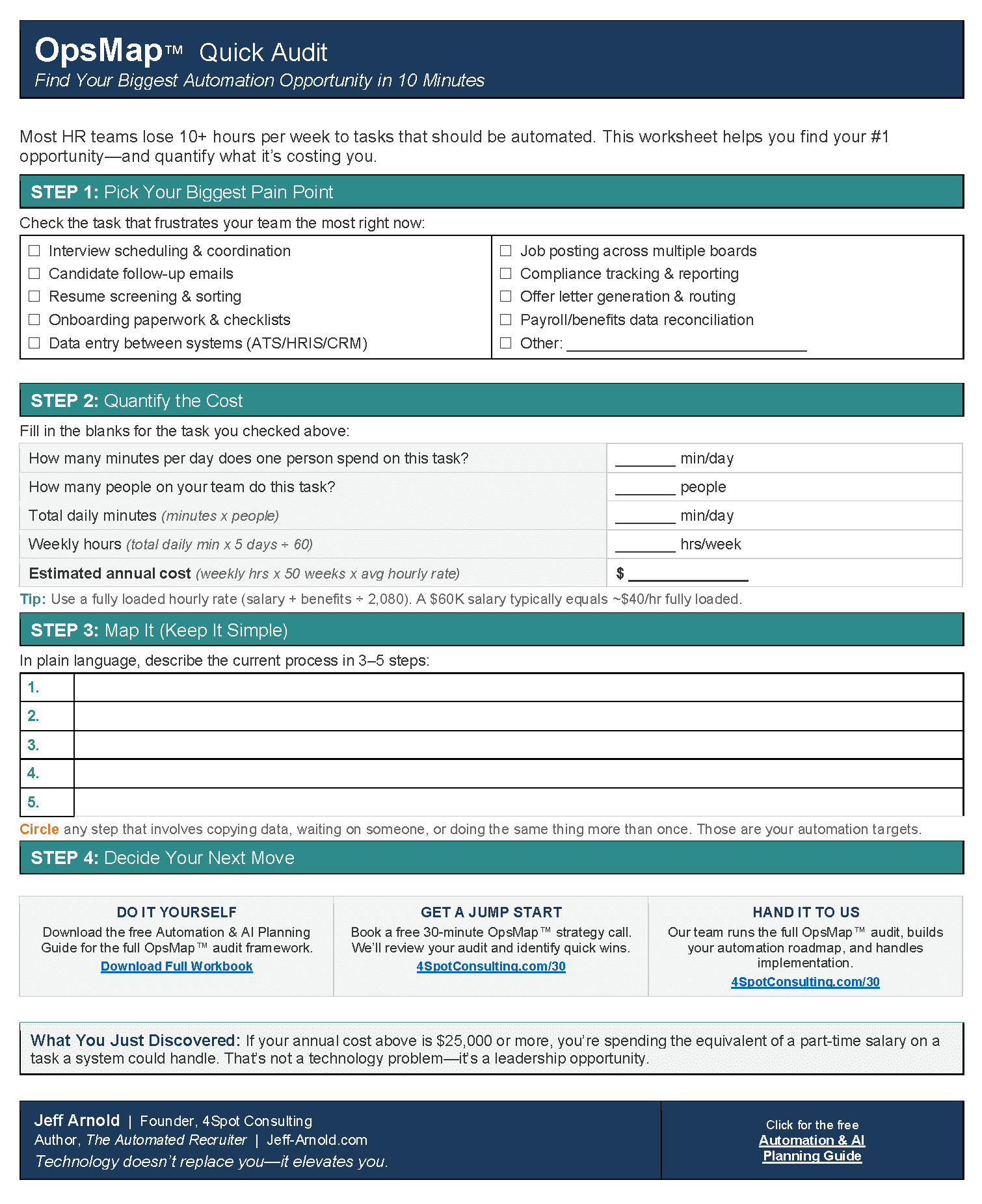
- Partner with Experts: Many organizations lack the internal expertise to implement complex AI and automation solutions. Partnering with specialized consultants, like 4Spot Consulting, can provide the strategic guidance and technical execution needed to identify inefficiencies, implement robust automation, and ensure a smooth transition. Our OpsMap™ diagnostic, for example, is designed to uncover precisely where AI and automation can deliver the greatest ROI in your HR operations.
- Foster a Culture of Continuous Learning: The pace of AI development is relentless. Organizations must cultivate a culture where continuous learning and adaptation are encouraged, both for leveraging new technologies and for upskilling the workforce to work alongside AI.
The AI revolution in HR is here to stay. For those who embrace it strategically, thoughtfully, and ethically, the rewards will be immense: more efficient operations, a more engaged workforce, and a stronger position in the competitive talent market. The time to act is now, transforming challenges into opportunities for growth and innovation.
If you would like to read more, we recommend this article: Mastering HR Automation: Your Guide to Efficiency and Growth


RELATED POST