Post: The EU AI Act: Reshaping HR & Operational AI Strategy
The European Union’s Landmark AI Act: Implications for HR and Operational Strategy
The global regulatory landscape for Artificial Intelligence is rapidly evolving, with the European Union leading the charge. In a historic move, the EU has recently finalized its Artificial Intelligence Act, becoming the first major jurisdiction to establish a comprehensive legal framework governing AI. This landmark legislation, set to reshape how AI systems are developed, deployed, and used across various sectors, carries significant implications not just for technology companies, but critically, for HR professionals and operational leaders worldwide. As businesses increasingly integrate AI into their workflows, understanding the nuances of this act is paramount for ensuring compliance, mitigating risks, and harnessing AI’s potential responsibly.
Understanding the EU AI Act: A New Paradigm for Responsible AI
Passed by the European Parliament, the EU AI Act introduces a risk-based approach to regulating AI systems. It categorizes AI applications into various risk levels: unacceptable, high, limited, and minimal. Systems deemed to pose an “unacceptable risk” to fundamental rights, such as real-time biometric identification in public spaces by law enforcement (with limited exceptions), are banned outright. “High-risk” AI systems, which include those used in critical infrastructure, medical devices, educational assessment, migration, law enforcement, and crucially, employment and worker management, face stringent requirements. These include obligations for robust risk assessment and mitigation systems, high-quality data governance, human oversight, transparency, accuracy, cybersecurity, and conformity assessments.
For systems categorized as “limited risk,” such as chatbots or AI-powered emotion recognition, less stringent transparency obligations apply, primarily requiring users to be informed they are interacting with an AI. The vast majority of AI systems, falling under “minimal risk,” are largely unregulated but are encouraged to adhere to voluntary codes of conduct. This tiered approach aims to foster innovation while safeguarding societal values and individual rights. The Act’s extraterritorial reach means that any organization developing or deploying AI systems that affect individuals within the EU, regardless of where the organization is based, will need to comply. This makes the EU AI Act a de facto global standard, compelling businesses everywhere to re-evaluate their AI strategies. As a recent briefing from the European Commission highlighted, “The aim is to strike a balance: facilitating innovation while building trust through responsible governance.”
Implications for HR Professionals: Navigating Ethical AI in Talent Management
The EU AI Act places HR and talent management squarely in the “high-risk” category for many applications. AI systems used for recruitment, hiring, promotions, performance evaluations, employee monitoring, and even decisions on termination, fall under this designation. This means HR professionals must now grapple with a new layer of compliance and ethical responsibility.
Specifically, the Act demands rigorous scrutiny of AI tools used throughout the employee lifecycle. HR departments will need to:
- **Ensure Data Quality and Bias Mitigation:** High-risk AI systems must be trained on unbiased, representative, and high-quality data to prevent discriminatory outcomes in hiring or performance reviews. This requires thorough data audits and ongoing monitoring.
- **Provide Transparency and Explainability:** Candidates and employees affected by AI-driven decisions will have the right to understand how those decisions were made. This necessitates clear communication about the AI tools used, their purpose, and their outputs.
- **Implement Human Oversight:** AI-driven HR decisions cannot be fully automated without human intervention. There must be mechanisms for human review and override, ensuring fairness and accountability.
- **Conduct Conformity Assessments:** High-risk AI systems will need to undergo pre-market conformity assessments and continuous post-market monitoring to ensure ongoing compliance with the Act’s requirements. This often involves detailed documentation and risk management systems.
- **Manage Vendor Relationships:** HR teams must ensure their AI vendors comply with the Act’s provisions, requiring robust due diligence and contractual agreements. A recent report by the Global AI Ethics Institute emphasized that “the supply chain of AI tools will be as scrutinized as the output itself.”
For HR leaders, this translates into a need for robust internal policies, comprehensive training for HR staff on AI ethics and compliance, and a proactive approach to auditing existing and prospective AI tools. It’s no longer just about efficiency; it’s about ethical, compliant, and transparent AI deployment.
Operational Strategy: Adapting Infrastructure for AI Compliance
Beyond HR, the EU AI Act has profound implications for a company’s broader operational strategy, particularly for businesses involved in developing or deploying AI systems across their operations. This is where 4Spot Consulting’s expertise in automation and AI integration becomes critical. Operational leaders must consider:
- **Data Governance and Data Pipelines:** The Act’s emphasis on high-quality data necessitates robust data governance frameworks. Organizations must ensure their data collection, storage, processing, and retention practices meet the Act’s requirements, especially for high-risk AI. This involves clear data lineage, access controls, and auditing capabilities, which can be significantly streamlined through intelligent automation.
- **Risk Management and Documentation:** Developing and maintaining comprehensive risk management systems for all high-risk AI applications is now a legal obligation. This includes impact assessments, ongoing monitoring, and the ability to demonstrate compliance to regulatory bodies. Automating documentation and audit trails through platforms like Make.com can be invaluable here.
- **Vendor and Third-Party Management:** Many companies deploy AI solutions developed by third-party vendors. Operational due diligence will need to expand to include AI Act compliance checks for all suppliers. This means reviewing vendor contracts, understanding their compliance frameworks, and potentially auditing their systems.
- **Skill Development and R&D:** Companies will need to invest in upskilling their operational and technical teams on AI ethics, regulatory compliance, and responsible AI development practices. Research and development processes for new AI tools will need to embed compliance from the ‘design’ phase.
- **Operational Resilience and Oversight:** The Act mandates human oversight for high-risk AI systems. Operations teams must design workflows that incorporate human review points, exception handling, and clear escalation paths, ensuring that automated processes are not completely opaque or uncontrollable. This is a core tenet of our OpsMesh™ framework – building resilient, human-in-the-loop automation.
Statements from the AI for Business Alliance highlight that “proactive integration of compliance into development lifecycles will be a differentiator.” Organizations that treat AI Act compliance not just as a burden but as an opportunity to refine their operational processes will gain a significant competitive edge.
Practical Takeaways for Leaders
The EU AI Act is a wake-up call for businesses globally. For HR and operational leaders, the path forward involves strategic planning and proactive implementation:
- **Conduct an AI Inventory and Audit:** Identify all AI systems currently in use across your organization, especially in HR and critical operations. Assess their risk levels against the EU AI Act’s framework.
- **Review Data Practices:** Ensure your data collection, storage, and processing for AI systems meet high standards for quality, relevance, and bias mitigation. This is fundamental to responsible AI.
- **Establish Governance Frameworks:** Develop internal policies and procedures for responsible AI deployment, including ethical guidelines, transparency protocols, and human oversight mechanisms.
- **Engage Legal and Compliance Experts:** Work closely with legal counsel to understand the specific implications for your business and ensure full compliance.
- **Invest in Training and Upskilling:** Educate HR, IT, and operational teams on the principles of responsible AI and the requirements of the new legislation.
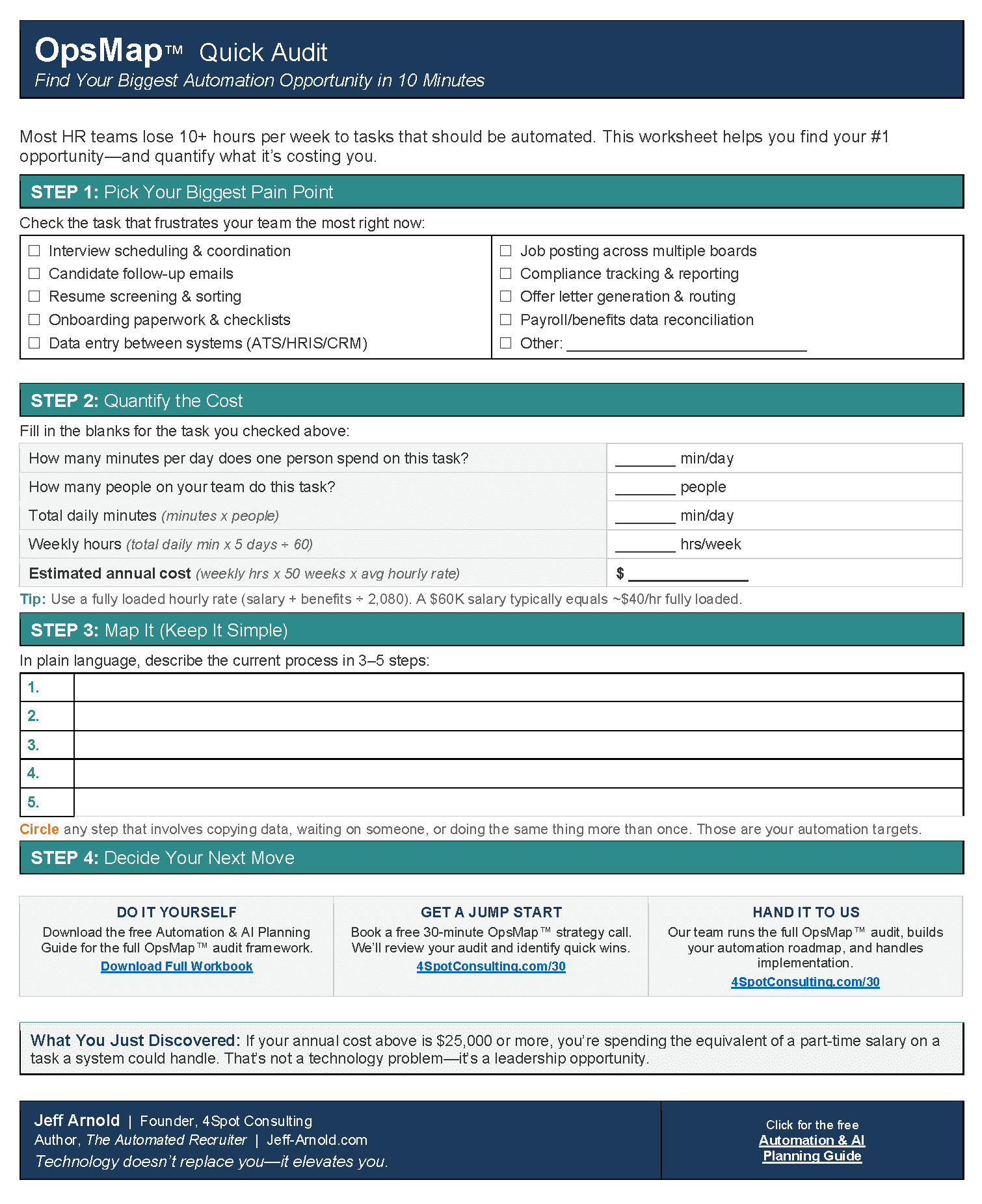
- **Partner with Automation and AI Specialists:** Consider engaging consultants like 4Spot Consulting to help audit your current systems, identify compliance gaps, and implement automated solutions for data governance, documentation, and risk management. Our OpsMap™ diagnostic can pinpoint immediate areas for improvement and a roadmap for compliant, efficient AI integration.
The EU AI Act represents a pivotal moment in the governance of artificial intelligence. While compliance may seem daunting, viewing it as an opportunity to build more ethical, transparent, and robust AI systems will not only meet regulatory demands but also foster greater trust among employees, customers, and stakeholders. For businesses aiming to stay ahead, embracing responsible AI is no longer optional—it’s imperative for future success.
If you would like to read more, we recommend this article: AI Automation for HR: Navigating the New Frontier
RELATED POST