Post: EU AI Act: Navigating Global HR Compliance and Ethical AI
EU Finalizes Groundbreaking AI Act: Navigating the New Compliance Landscape for Global HR
The European Union has officially adopted its pioneering Artificial Intelligence Act, marking a pivotal moment in the global regulation of AI technologies. This landmark legislation, the first comprehensive legal framework for AI globally, introduces stringent rules for developers and deployers of AI systems, particularly those deemed “high-risk.” For HR professionals and business leaders worldwide, especially those operating or recruiting within the EU or utilizing AI tools developed in the region, this act isn’t just a distant legislative move; it’s a significant shift in the operational landscape that demands immediate attention and strategic adaptation. The implications for talent acquisition, performance management, compliance, and technological investment are profound, ushering in an era where ethical AI deployment is not just a best practice, but a legal imperative.
Understanding the EU AI Act’s Core Tenets
The EU AI Act categorizes AI systems based on their risk level, with “unacceptable risk” applications (e.g., social scoring, real-time remote biometric identification in public spaces by law enforcement, with limited exceptions) being outright banned. The most significant focus, however, is on “high-risk” AI systems, which include those used in critical infrastructure, law enforcement, migration, border control, and crucially for HR, employment, worker management, and access to self-employment. According to a European Parliament press release, these high-risk systems will be subject to rigorous requirements, including data governance, human oversight, cybersecurity, transparency, and conformity assessments before they can be placed on the market or put into service.
A fictional “Global HR Policy Review” publication, in its recent analysis, highlighted that the Act’s broad definition of “high-risk” AI systems extends to tools used for recruiting, selecting, monitoring, or evaluating individuals in the workplace. This encompasses AI-powered resume screening, predictive analytics for candidate suitability, emotion recognition software in interviews, and even systems that monitor employee productivity. The Act mandates that providers of such systems must implement robust risk management systems, ensure data quality, keep detailed logging, provide clear user information, and enable human oversight. Furthermore, these systems must undergo a conformity assessment before deployment.
Immediate Implications for HR Professionals
The enactment of the EU AI Act brings forth a wave of challenges and opportunities for HR departments globally, particularly those within multinational corporations. The primary implication is the immediate need for a comprehensive audit of all AI tools currently in use or under consideration for HR functions. This audit must identify whether these tools fall under the “high-risk” category and assess their compliance with the Act’s new standards.
For HR leaders, this translates into a heightened focus on transparency and explainability. Candidates and employees subjected to AI-driven decisions will have a greater right to understand how these systems work, what data they use, and how they arrive at their conclusions. This necessitates clearer communication, enhanced documentation, and potentially new internal processes for challenging AI-generated outcomes. The “Future of Work Institute Annual Report: AI Readiness in 2024” emphasized that companies not only need to ensure their AI tools are compliant but also that their HR teams are adequately trained to manage these new requirements and communicate them effectively to stakeholders.
Another significant impact is on the development and procurement of HR tech. Providers of AI-powered HR solutions will need to adapt their offerings to meet EU standards, creating a potential divergence in AI tool capabilities and features between the EU and other regions. This could lead to a more fragmented HR tech market, requiring global companies to carefully vet their vendors for EU AI Act compliance. For HR departments, this means a more complex vendor selection process, prioritizing partners who can demonstrate a clear commitment to ethical AI and regulatory adherence. The Act also places accountability firmly on the deployers of AI systems, meaning HR departments cannot simply defer responsibility to their tech vendors.
Context for Automation and AI in HR
At 4Spot Consulting, we’ve consistently advocated for the strategic implementation of automation and AI to streamline HR processes, reduce human error, and free up high-value employees from low-value work. Our OpsMesh framework is designed to integrate disparate systems and optimize workflows. The EU AI Act, while introducing new layers of complexity, underscores the critical importance of a strategic, well-governed approach to AI adoption rather than a reactive one.
This legislative development highlights the need for robust data governance – a cornerstone of effective automation. Accurate, unbiased data is paramount when feeding AI systems, especially those making decisions about human capital. Automation platforms like Make.com, which we frequently leverage for our clients, become even more vital in orchestrating data flows and ensuring the integrity and transparency required by new regulations. AI isn’t just about faster processing; it’s about processing with integrity and accountability.
The Act also pushes the narrative towards “human-in-the-loop” AI, emphasizing the need for human oversight of high-risk systems. This aligns perfectly with our philosophy: AI should augment human capabilities, not replace critical human judgment. Automation, when implemented correctly, empowers HR professionals by handling routine tasks, allowing them to focus on the strategic, human-centric aspects of their roles that require empathy, nuance, and ethical consideration – precisely where human oversight is irreplaceable.
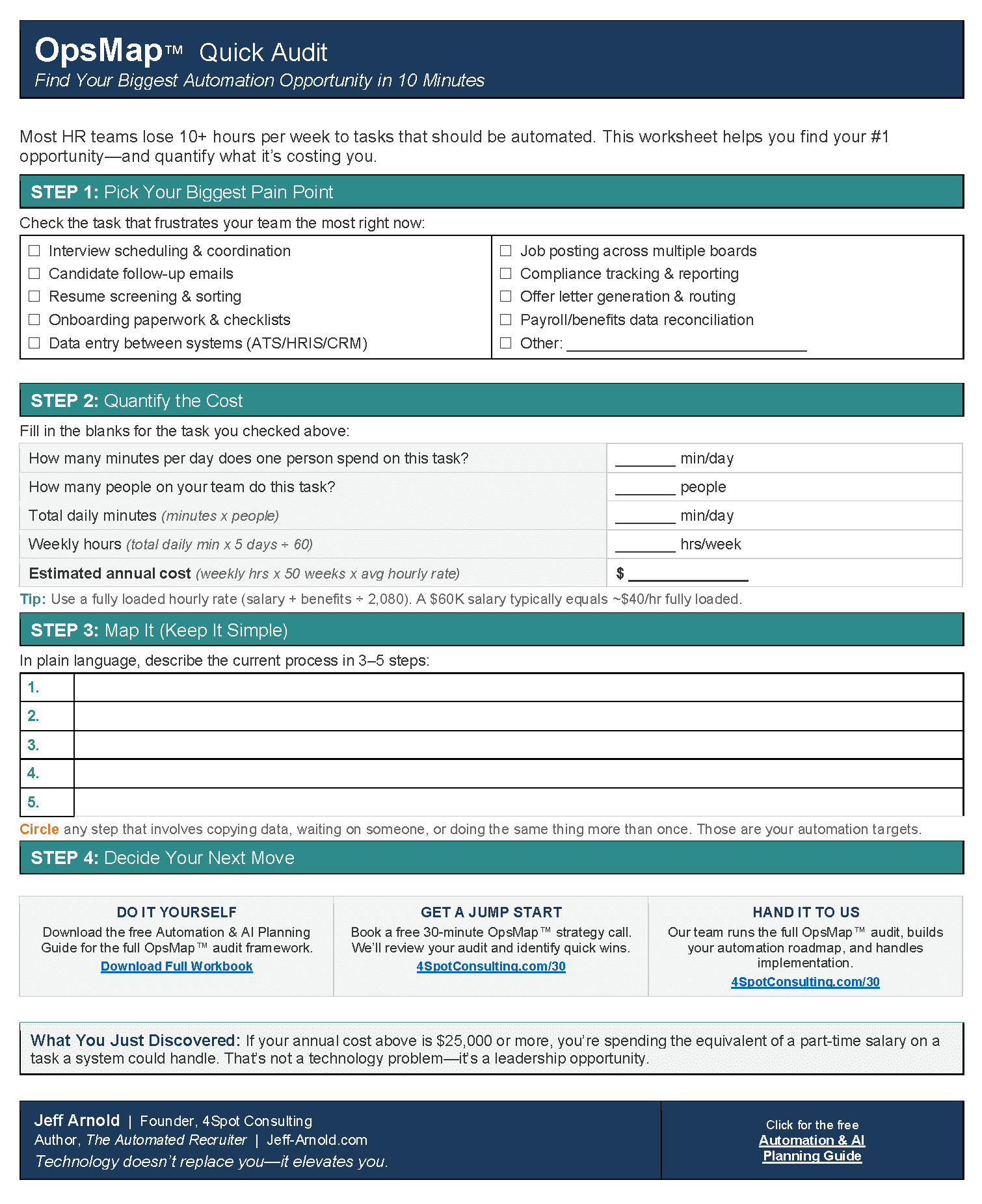
Consider the scenario of an HR firm automating resume intake and parsing, a service where 4Spot Consulting helped a client save over 150 hours per month. Under the new Act, such a system, if using AI to rank or filter candidates, would likely be high-risk. This would require the firm to ensure the AI’s data quality, test for bias, provide transparency to candidates, and maintain human oversight in the final decision-making process. Our strategic audit (OpsMap™) helps identify these exact areas of risk and opportunity, ensuring automation not only drives efficiency but also maintains compliance.
Practical Takeaways for HR Leaders and Businesses
- **Conduct an AI Tool Inventory & Risk Assessment:** Categorize all AI systems used in HR, recruitment, and worker management. Determine which fall under the “high-risk” definition and initiate a compliance review against the EU AI Act’s requirements. This isn’t a one-time task; it’s an ongoing process.
- **Prioritize Data Governance and Bias Mitigation:** Ensure that the data used to train and operate HR AI systems is high-quality, relevant, and free from bias. Implement robust data cleansing and auditing processes. Bias in AI isn’t just an ethical concern; it’s now a legal liability.
- **Enhance Transparency and Explainability:** Prepare to provide clear, understandable information to job applicants and employees about how AI systems are used in decisions affecting them. This includes the logic, the data used, and the potential impact of the AI’s output.
- **Strengthen Human Oversight Mechanisms:** For high-risk AI systems, define clear protocols for human review, intervention, and override. Ensure HR professionals are trained to interpret AI outputs critically and make informed, final decisions.
- **Re-evaluate Vendor Relationships:** Engage with AI HR tech providers to understand their compliance strategies for the EU AI Act. Prioritize vendors who can demonstrate their commitment to ethical AI development, robust risk management, and regulatory adherence. Request documentation of their conformity assessments.
- **Invest in Training and Awareness:** Educate your HR teams, managers, and legal counsel on the implications of the EU AI Act. Foster a culture of responsible AI use and continuous learning about emerging regulations.
The EU AI Act is more than just a regulatory hurdle; it’s an opportunity to embed ethical considerations and robust governance into the very fabric of how businesses leverage artificial intelligence. For HR, this means a shift towards more transparent, equitable, and human-centric AI applications. Proactive adaptation will not only ensure compliance but also build greater trust with employees and candidates, enhancing employer brand and operational resilience.
If you would like to read more, we recommend this article: Is Your HR Department Future-Proof? Why Automation is Non-Negotiable
RELATED POST