Post: Beyond the Hype: Strategic AI for B2B Recruitment and Tangible ROI
Navigating the New Era of AI in Recruitment: Strategic Implementation for B2B Growth
The promise of artificial intelligence in recruitment has long been a subject of enthusiastic discussion, but for many B2B leaders, the reality has often fallen short of the hype. We hear about AI transforming talent acquisition, yet operational bottlenecks, inconsistent candidate experiences, and a persistent drain on high-value employee time remain stubbornly present. At 4Spot Consulting, we understand that true AI integration isn’t about chasing the next shiny tool; it’s about strategic implementation that delivers tangible ROI and genuine efficiency gains.
For B2B companies with over $5M in ARR, your recruitment function isn’t just a cost center; it’s a critical pipeline for growth and innovation. Manual resume screening, repetitive interview scheduling, and data entry errors aren’t merely inconveniences—they represent significant lost revenue, delayed project timelines, and a diminished employer brand. These inefficiencies are where AI, when applied correctly, can move beyond theoretical benefits to become a powerful operational asset.
Beyond Basic Automation: The Strategic Imperative of AI in Talent Acquisition
Many organizations dip their toes into AI by automating simple tasks. While a step in the right direction, this often leaves the deeper, more complex pain points unaddressed. True strategic AI integration in recruitment means re-architecting your entire talent acquisition workflow, from initial candidate sourcing to onboarding, using AI to augment human capabilities, eliminate human error, and free your high-value employees for strategic engagement.
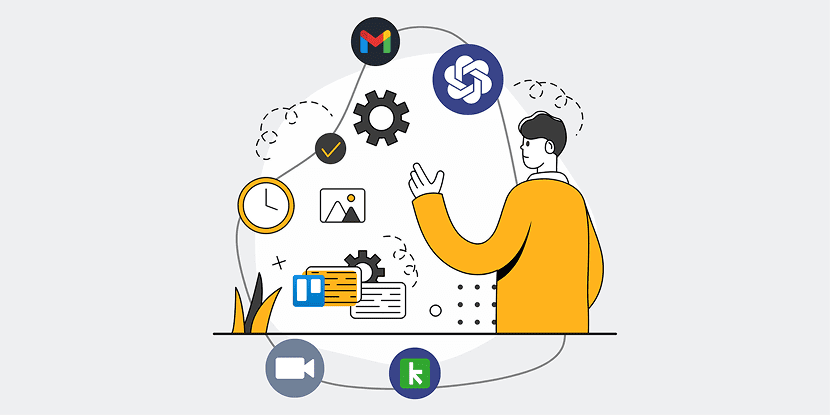
Consider the sheer volume of data involved in modern recruitment. Resumes, applications, interview notes, background checks, and CRM entries all demand attention. Without a cohesive system, this data becomes a liability, not an asset. Our OpsMesh framework addresses this head-on, creating a unified ecosystem where AI tools seamlessly connect, share data, and automate decisions based on predefined parameters. This isn’t just about speed; it’s about consistency, compliance, and leveraging data to make smarter hiring decisions.
Unlocking Efficiency: Where AI Delivers Real Impact
When we engage with B2B companies, we often find common areas ripe for AI-powered transformation:
Streamlining Candidate Sourcing and Screening
The initial funnel can be overwhelming. AI-powered tools can parse thousands of resumes in minutes, identifying candidates who truly match specific skill sets and experience levels, not just keywords. This moves beyond basic filtering, using natural language processing to understand context and nuance. For example, we helped an HR tech client save over 150 hours per month by automating their resume intake and parsing process using Make.com and AI enrichment, then syncing to Keap CRM. This wasn’t just about saving time; it allowed their recruiters to focus on candidate engagement, not data entry.
Automating Interview Scheduling and Logistics
The back-and-forth of scheduling can consume hours of a recruiter’s day. AI-driven scheduling tools can integrate with calendars, send automated reminders, and even handle rescheduling, ensuring candidates have a smooth, professional experience. This reduces no-shows and allows recruiters to spend more time building relationships.
Enhancing Candidate Communication and Engagement
AI chatbots and automated email sequences can provide instant answers to common candidate questions, deliver personalized updates, and even pre-screen applicants with structured questions. This ensures no candidate is left in the dark, improving their perception of your organization and increasing offer acceptance rates.
The goal isn’t to replace human recruiters, but to empower them. By offloading repetitive, low-value tasks to AI, your talent acquisition team can focus on the human element: building rapport, assessing cultural fit, and strategizing on long-term talent needs. This shift not only makes your team more productive but also more strategic, directly impacting your company’s ability to scale.
Implementing AI with Precision: The 4Spot Consulting Approach
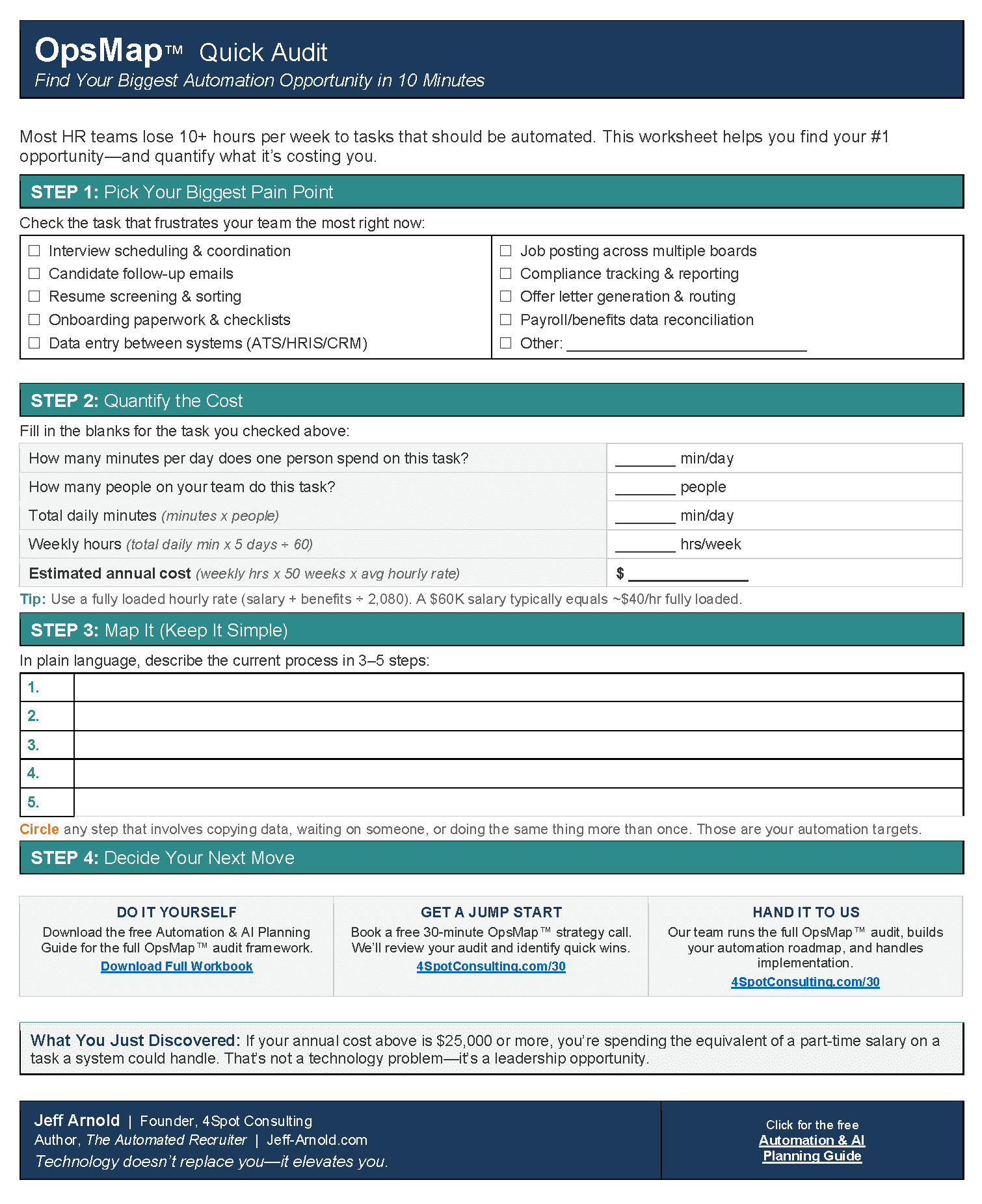
Our experience, cultivated over 35 years of leadership from startups to Fortune 500s, has shown us that successful AI integration isn’t a DIY project. It requires a strategic lens, a deep understanding of business operations, and expertise in connecting disparate systems. Our OpsMap™ diagnostic is where this process begins. We conduct a strategic audit to uncover the precise inefficiencies in your current recruitment process and identify high-impact automation and AI opportunities that align with your business objectives.
Following the OpsMap™, our OpsBuild™ phase translates these insights into actionable systems. We leverage powerful low-code platforms like Make.com to integrate your existing HR tech stack—your ATS, CRM (Keap, HighLevel), communication tools, and document management systems. We don’t just build; we craft bespoke, end-to-end solutions that are robust, scalable, and designed to eliminate human error.
The journey doesn’t end with implementation. Our OpsCare™ program provides ongoing support, optimization, and iteration. As your business evolves and AI capabilities advance, we ensure your systems remain cutting-edge and continue to deliver maximum value. We’ve seen firsthand how a strategic-first approach can lead to outcomes like 240% production increases and millions in annual cost savings—not just for recruitment, but across the entire operational landscape.
Ready to move beyond the hype and implement AI solutions that genuinely save you 25% of your day in recruitment operations? Stop drowning in manual work and start building a talent acquisition function that is efficient, scalable, and strategically aligned with your growth. Your competitors are likely exploring this space; ensuring you have a coherent, ROI-driven strategy is no longer optional.
If you would like to read more, we recommend this article: The Strategic Imperative of AI in Business Operations



RELATED POST