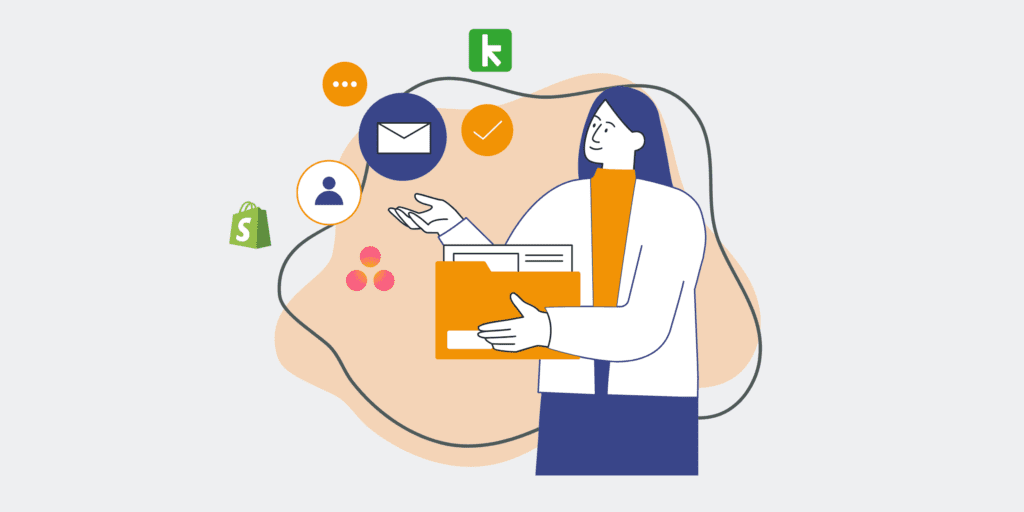
Post: From Chaos to Clarity: Automating Your Single Source of Truth
Beyond the Spreadsheet: Automating Data Synchronization for a Single Source of Truth
In the relentless pursuit of efficiency and scalability, businesses often find themselves grappling with a formidable enemy: fragmented data. Information sprawls across spreadsheets, CRM systems, HR platforms, and myriad other applications, creating silos that hinder clarity and hamstring decision-making. This isn’t just an inconvenience; it’s a systemic drain on resources, fostering errors and diverting high-value employees from strategic work to the soul-crushing task of manual data reconciliation.
The Hidden Costs of Disconnected Data
Consider the typical operational landscape. A lead enters the CRM, an applicant applies through an ATS, a client signs a contract in a document management system, and a new hire onboarding process kicks off in a separate HR portal. Each of these touchpoints generates critical data, yet often, these systems do not communicate seamlessly. The result? Hours spent copying and pasting, reconciling discrepancies, or chasing down the “latest version” of a client’s information.
This manual connective tissue isn’t just slow; it’s a breeding ground for human error. A misplaced digit, an outdated address, a forgotten update – these seemingly minor oversights can cascade into significant issues, from incorrect invoices and compliance breaches to frustrating candidate experiences and damaged client relationships. The cumulative effect is a loss of trust in the data itself, forcing leaders to make critical decisions based on incomplete or inaccurate information.
Furthermore, the absence of a single source of truth stifles agility. When departments operate with different sets of data, collaboration becomes a chore, and strategic initiatives slow to a crawl. Reporting becomes a complex, time-consuming exercise, making it difficult to gain a holistic view of business performance or identify emerging trends. For high-growth B2B companies, this inefficiency can be a significant barrier to scaling, as every new client or hire exponentially increases the data management burden.
Building Your Data Backbone: The Power of Automation
The solution lies not in more manual effort, but in strategic automation. By leveraging robust low-code automation platforms like Make.com, businesses can forge intelligent connections between disparate systems, transforming a chaotic data landscape into a coherent, real-time single source of truth. This isn’t about replacing humans; it’s about empowering them by eliminating the rote, repetitive tasks that steal their valuable time and energy.
At 4Spot Consulting, our OpsMesh framework is designed precisely for this challenge. We don’t just build automations; we architect an overarching strategy that integrates your critical systems, ensuring data flows effortlessly and accurately across your entire organization. Imagine a scenario where a new candidate application automatically populates your CRM, triggers an initial screening task in your project management tool, and backs up key documents to a central repository – all without a single manual touch.
This level of integration ensures that everyone, from HR and recruiting to sales and operations, is working from the same accurate, up-to-date information. It dramatically reduces errors, frees up valuable employee time, and provides leadership with the reliable data necessary for informed, strategic decision-making. It’s about building a data infrastructure that supports, rather than impedes, your business growth.
Realizing the ROI: A Case in Point
We’ve seen firsthand the transformative impact of this approach. For one HR tech client, the manual processing of resumes was a colossal time sink. Each resume had to be downloaded, parsed for key information, and then manually entered into their Keap CRM. This wasn’t just tedious; it was costing them valuable hours that could have been spent engaging with top talent.
Through our OpsBuild process, we implemented an automated solution using Make.com and AI enrichment tools. Now, when a resume comes in, it’s automatically extracted, key data points are identified and validated by AI, and then seamlessly pushed into Keap. This system not only eliminated the need for manual data entry but also ensured data consistency and completeness across the board. The result? The client saved over 150 hours per month, a tangible ROI that directly impacted their bottom line and allowed their team to focus on relationship-building and strategic hiring initiatives.
This kind of outcome isn’t an anomaly; it’s the expected result when you move beyond ad-hoc solutions and embrace a strategic, integrated automation approach. Your high-value employees are your greatest asset; allowing them to be bogged down by manual data entry is a luxury no growth-oriented business can afford.
Embrace Clarity, Drive Growth
The journey to a single source of truth begins with recognizing the current inefficiencies and committing to a strategic shift. Automating data synchronization isn’t just about saving time; it’s about fundamentally transforming how your business operates, empowering your teams, and fortifying your decision-making processes. It’s about laying the groundwork for sustainable, scalable growth in an increasingly data-driven world.
Ready to uncover automation opportunities that could save you 25% of your day? Book your OpsMap™ call today.
If you would like to read more, we recommend this article: The Strategic Imperative of Business Process Automation in the AI Era




RELATED POST