Post: Mastering B2B Data: AI & Automation for a Single Source of Truth
Beyond Data Silos: Achieving a Single Source of Truth with AI and Automation
In today’s fast-paced B2B landscape, business leaders are constantly seeking efficiencies, not just for incremental gains but for transformative shifts in how their operations function. One of the most persistent and debilitating challenges is the fragmentation of data. Information lives in a dozen different systems – CRM, HRIS, project management tools, communication platforms – each with its own truth. This data deluge isn’t just an inconvenience; it’s a bottleneck that chokes productivity, invites human error, and fundamentally impedes scalability.
At 4Spot Consulting, we speak to business owners and executives daily who are grappling with this exact problem. They know their data is valuable, but extracting that value, ensuring its accuracy, and making it actionable feels like a Herculean task. The promise of a “single source of truth” (SSOT) is appealing, but the reality of achieving it often seems out of reach. We contend that it’s not only within reach but essential for any high-growth B2B company looking to save 25% of its day and unlock true operational agility.
The Pervasive Challenge of Fragmented Data
Imagine a scenario where your sales team updates a client record in your CRM, but the project management tool still reflects outdated contact information. Or your HR department onboarding a new hire, only to have their details manually re-entered into payroll, benefits, and internal communication systems. These aren’t isolated incidents; they’re daily occurrences that compound over time, leading to significant wasted effort, duplicate data, and a lack of confidence in crucial business insights. Decision-makers find themselves second-guessing reports, relying on incomplete pictures, and spending valuable time reconciling discrepancies rather than innovating.
The consequences extend beyond mere inconvenience. Fragmented data leads to lost sales opportunities, extended hiring cycles, compliance risks due to inconsistent records, and a general inability to accurately measure performance across departments. It fuels low-value work for high-value employees, detracting from their ability to contribute strategically. The strategic goal of becoming a data-driven organization remains elusive when the underlying data infrastructure resembles a patchwork quilt rather than a cohesive tapestry.
Why Traditional Approaches Fall Short
Many businesses attempt to solve this problem with piecemeal solutions: adding another software tool, hiring more administrative staff to perform manual data entry, or engaging in periodic, time-consuming data clean-up projects. While these approaches might offer temporary relief, they rarely address the root cause. Adding more tools often exacerbates fragmentation, and manual efforts are inherently prone to error and unsustainable at scale. What’s needed is a strategic, architectural approach to data flow and system integration – a philosophy we embody with our OpsMesh™ framework.
4Spot Consulting’s Vision: The Single Source of Truth, Powered by AI and Automation
Our approach at 4Spot Consulting isn’t about adding another layer of complexity; it’s about intelligent simplification. We believe that achieving a single source of truth is not just about connecting systems, but about orchestrating a seamless flow of information that is always accurate, always up-to-date, and always accessible when and where it’s needed. This is where the power of advanced automation and AI truly comes into play.
Unifying Systems with Automation and AI
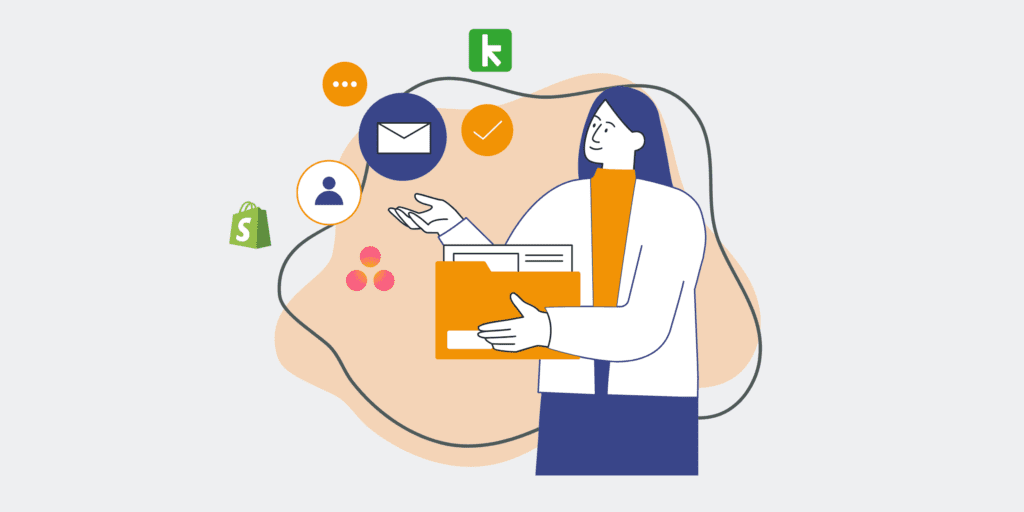
We leverage robust integration platforms like Make.com, combined with specialized tools like Keap for CRM, PandaDoc for documentation, and Unipile for communication aggregation, to build an interconnected ecosystem. Our process begins with the OpsMap™ – a strategic audit that uncovers exactly where your data silos exist and identifies the most impactful opportunities for automation. We then move into OpsBuild™, implementing customized automation sequences that pull data from disparate sources, cleanse it, enrich it with AI, and centralize it into your chosen primary systems. For instance, new lead information from a web form can automatically populate your Keap CRM, trigger a welcome email, create a task for a sales rep, and simultaneously update a master reporting dashboard. All without a single manual touch.
The integration of AI takes this a step further. AI can analyze unstructured data, extract key insights, categorize information, and even identify anomalies or potential errors before they propagate. Imagine using AI to automatically parse resumes, extract relevant skills and experience, and populate candidate profiles in your HR system, saving hundreds of hours and ensuring data consistency. This not only streamlines operations but also provides richer, more reliable data for strategic analysis.
The OpsMesh™ Advantage: Strategic Integration, Not Just Connection
Our OpsMesh™ framework goes beyond simple API connections. It’s a holistic strategy for creating an interconnected web of operational processes and data flows, ensuring that every piece of information has a designated home and a clear path to wherever it needs to go. This eliminates the need for manual data reconciliation, drastically reduces human error, and frees up your high-value employees to focus on tasks that truly drive growth and innovation.
We’ve seen firsthand the transformative impact of this approach. For example, we helped an HR tech client save over 150 hours per month by automating their resume intake and parsing process using Make.com and AI enrichment, then syncing to Keap CRM. This wasn’t just about saving time; it was about transforming their hiring pipeline into a precise, data-driven engine. The ability to trust your data, knowing it’s consistent across all touchpoints, empowers faster, more confident decision-making across the entire organization.
Your Path to Operational Clarity and Scalability
Achieving a single source of truth is no longer a luxury; it’s a strategic imperative for B2B companies aiming for sustained growth and efficiency. By strategically deploying automation and AI, businesses can eliminate the drag of fragmented data, elevate their operational intelligence, and ensure that every employee, from sales to HR to operations, is working from the same accurate, timely information. It’s about building a resilient, scalable foundation that can support your company’s ambitions today and well into the future.
Ready to uncover automation opportunities that could save you 25% of your day and establish a robust single source of truth in your business? Our automation playbook starts with the OpsMap™—a strategic audit to uncover inefficiencies, surface opportunities, and roadmap profitable automations. Book your OpsMap™ call today.
If you would like to read more, we recommend this article: [TITLE]



RELATED POST