Post: The Hidden Costs of Manual Data Entry in HR & Recruiting
The Unseen Drain: How Manual Data Entry Undermines HR and Recruiting Efficiency
In the relentless pursuit of growth and efficiency, many high-growth B2B companies still grapple with a silent saboteur: manual data entry. While seemingly innocuous, the repetitive task of inputting, updating, and cross-referencing information across disparate systems in HR and recruiting departments is far more than a time sink; it’s a direct drain on resources, a breeding ground for errors, and a significant barrier to scalability. At 4Spot Consulting, we’ve witnessed firsthand how this operational bottleneck stifles progress and diverts high-value employees from strategic work.
Consider the typical journey of a candidate or a new hire. From application to offer letter, background checks to onboarding forms, each stage demands data. Without automation, this data is often manually transcribed from one platform to another—applicant tracking systems (ATS) to human resource information systems (HRIS), payroll platforms to benefits enrollment portals. Each keystroke carries the risk of a typo, each re-entry adds precious minutes to a process, and each delay impacts candidate experience and employee morale.
The Compounding Costs of Inaccuracy
Human error is an inescapable reality, and manual data entry magnifies its potential impact. A misplaced digit in a social security number, an incorrect hire date, or an overlooked field can trigger a cascade of problems. Incorrect payroll calculations, benefits enrollment delays, compliance issues, and even legal ramifications are all potential outcomes. These aren’t just minor inconveniences; they lead to rectifying measures that consume even more time and resources, creating a vicious cycle of reactive fixes rather than proactive management.
Beyond the direct financial costs associated with correcting errors, there’s an unseen erosion of trust. When new hires experience delays in receiving their first paycheck or accessing their benefits due to administrative oversights, it sends a message of disorganization. This initial negative impression can impact engagement, retention, and even your employer brand, making future recruitment efforts more challenging.
Lost Time, Lost Talent Focus
For HR and recruiting professionals, every minute spent on manual data entry is a minute not spent on strategic initiatives. These are the individuals tasked with sourcing top talent, nurturing company culture, developing retention strategies, and ensuring compliance—all high-value activities that directly impact the bottom line. Instead, they find themselves bogged down by what we call “low-value work”: tasks that are repetitive, rule-based, and ripe for automation.
Imagine your top recruiter, capable of building rapport with C-suite executives, spending hours each week transferring candidate data from LinkedIn Recruiter to your ATS, then updating the CRM. Or your HR Generalist, an expert in employee relations, dedicating half their day to manually inputting new employee information into various systems. This isn’t just inefficient; it’s a profound misallocation of human capital. It prevents your most skilled employees from focusing on the work that truly drives your business forward, impacting productivity and job satisfaction.
Stifling Scalability and Growth
High-growth B2B companies are defined by their ability to scale. However, manual processes, particularly data entry, present a hard ceiling to this ambition. As your company expands, so does the volume of data, candidates, and employees. Relying on manual input means that operational capacity is directly tied to headcount, not process efficiency.
The Impact on Onboarding Velocity
A slow and clunky onboarding process, riddled with manual data entry, not only frustrates new hires but also delays their time-to-productivity. Each day an employee isn’t fully integrated and contributing is a lost opportunity. Automation here isn’t just about saving time; it’s about accelerating the impact of new talent. Without it, growth means simply hiring more administrators to handle the data, rather than leveraging technology to do the heavy lifting, ultimately increasing operational costs without proportional strategic gains.
Furthermore, the inability to quickly and accurately onboard new talent can directly impact project timelines, client deliverables, and overall company performance. In a competitive market, agility is key, and manual bottlenecks create an unnecessary drag.
The Automation Imperative
The solution isn’t to simply work harder or hire more people to manage the data. It’s to work smarter by embracing automation and AI. By implementing intelligent workflows, businesses can automate data transfer between systems, eliminate redundant entries, and significantly reduce the potential for human error. This frees up HR and recruiting teams to focus on what they do best: building exceptional teams and fostering a thriving workplace culture.
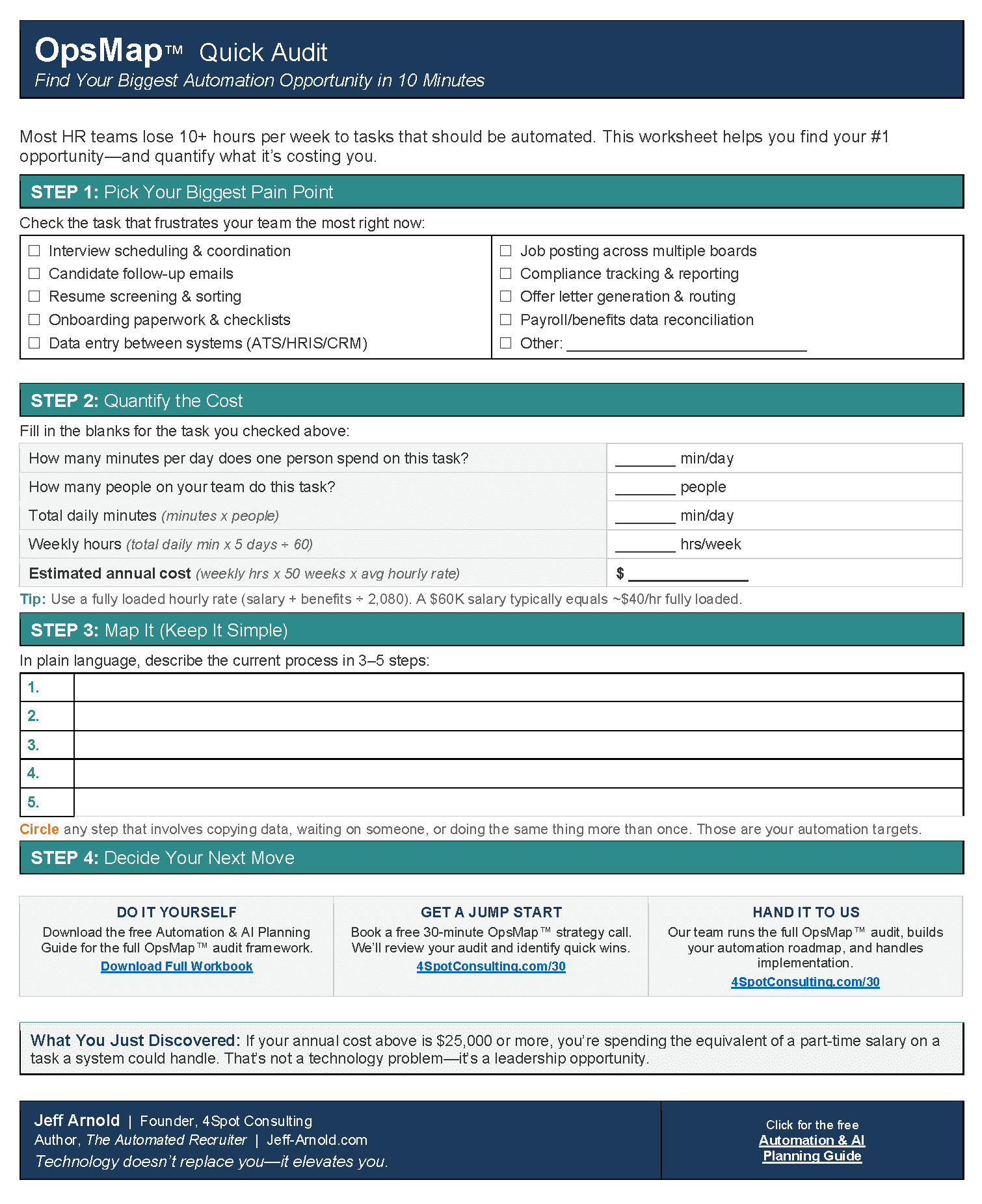
At 4Spot Consulting, our OpsMap™ framework helps companies identify these critical points of friction. We pinpoint where manual data entry is draining resources and then design and implement robust automation solutions using tools like Make.com, integrating your ATS, CRM, HRIS, and payroll systems into a cohesive, error-resistant ecosystem. The result is not just a reduction in operational costs, but a dramatic increase in efficiency, accuracy, and the capacity for strategic growth, ultimately saving high-value employees up to 25% of their day.
If you would like to read more, we recommend this article: Mastering HR Operations: Strategies for Scalability and Efficiency