
Post: AI for B2B CRM: From Data Chaos to Strategic Command
Unlocking Peak Performance: How AI is Redefining CRM Data Management for B2B Leaders
In the high-stakes world of B2B sales and operations, accurate and accessible CRM data isn’t just a convenience—it’s the lifeblood of strategic decision-making and sustainable growth. Yet, for many high-growth companies, managing this critical asset remains a persistent challenge, riddled with manual errors, siloed information, and the sheer volume of data that can overwhelm even the most diligent teams. The promise of artificial intelligence, however, is now transforming this landscape, offering a new paradigm for CRM data management that moves beyond simple record-keeping to proactive, predictive, and truly intelligent operations.
At 4Spot Consulting, we observe a common thread among businesses struggling to scale: their valuable human capital is often mired in low-value, repetitive data tasks. High-value employees, those who should be focused on cultivating client relationships and driving innovation, instead spend hours correcting inconsistencies, merging duplicate entries, and chasing down missing information. This isn’t just inefficient; it’s a significant drain on resources and a bottleneck to achieving the agility demanded by today’s competitive market.
The Data Dilemma: Why Traditional CRM Approaches Fall Short
The traditional approach to CRM data management, heavily reliant on manual input and periodic cleanup, is inherently flawed in the age of digital acceleration. Data decays rapidly; contact information changes, company structures evolve, and client needs shift. Without a dynamic system to capture and integrate these changes, CRMs quickly become repositories of outdated, incomplete, or inaccurate information. This ‘dirty data’ leads to a cascade of problems: misdirected marketing campaigns, inaccurate sales forecasts, wasted outreach efforts, and ultimately, a diminished customer experience.
Consider the impact on a sales team. If a prospect’s industry code is incorrect, they might receive irrelevant communications. If their decision-maker contact has left the company, sales efforts are wasted. If historical interaction data is fragmented across different systems, the sales representative lacks a holistic view, hindering their ability to craft compelling, personalized pitches. These seemingly small inefficiencies accumulate, eroding trust, lengthening sales cycles, and increasing operational costs.
AI as the Catalyst for CRM Transformation
This is where AI steps in, not as a replacement for human insight, but as an exponential enhancer of existing capabilities. AI-powered CRM data management goes far beyond basic automation. It leverages machine learning algorithms to analyze vast datasets, identify patterns, and perform complex tasks that would be impossible or impractical for human teams.
One of the most immediate benefits is in data hygiene. AI can autonomously identify and merge duplicate records, standardize data formats (e.g., ensuring all phone numbers are in a consistent format), and enrich existing data with external sources, such as company firmographics or social media profiles. This ensures a “single source of truth,” a core tenet of our OpsMesh framework, where all stakeholders operate from the most accurate and up-to-date information available.
Predictive Insights and Proactive Operations
Beyond cleaning up existing data, AI introduces a powerful predictive element. Machine learning models can analyze historical interactions, customer behaviors, and market trends to forecast future outcomes. For instance, AI can predict which leads are most likely to convert, identify customers at risk of churn, or suggest the optimal next action for a sales representative based on past successful engagements. This shifts B2B operations from reactive to proactive, allowing teams to anticipate needs and intervene strategically.
In the realm of B2B, where relationships are paramount, AI can even help personalize communications at scale. By analyzing customer profiles and previous interactions, AI can suggest tailored content, recommend relevant products or services, and even draft personalized email responses, all while maintaining the authentic, human touch that defines strong business relationships. This ensures that every customer touchpoint is optimized for impact and relevance, elevating the customer journey.
Automating the Mundane, Empowering the Strategic
The real power of AI in CRM data management lies in its ability to offload the mundane, repetitive tasks that consume valuable employee time. Tasks like data entry, categorization, and validation, which are prone to human error and boredom, can be fully automated. This frees up high-value employees—from sales and marketing to HR and operations—to focus on strategic initiatives, building relationships, and solving complex problems that genuinely move the needle for the business.
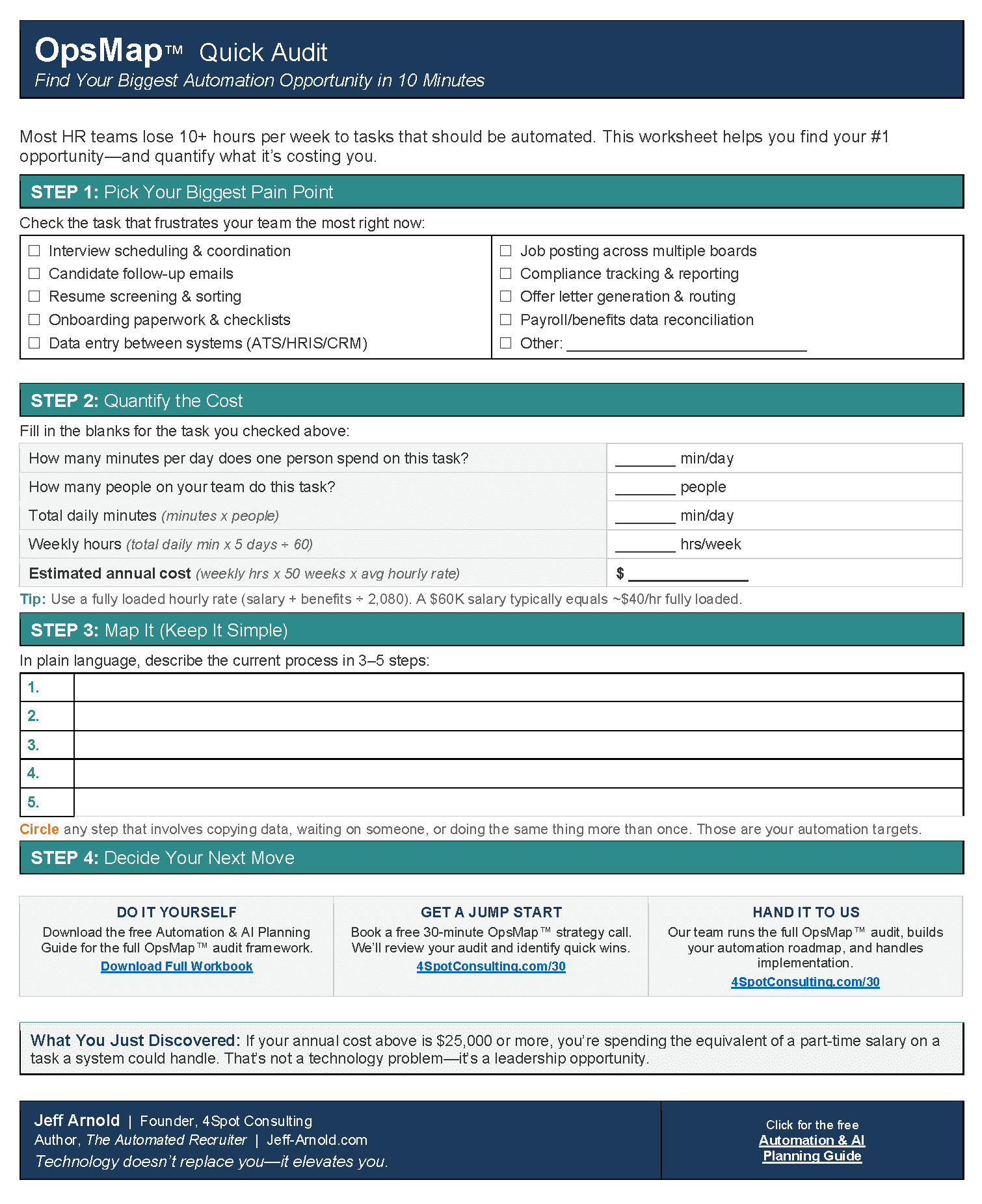
At 4Spot Consulting, through our OpsMap™ diagnostic, we consistently uncover how much time and money are lost to inefficient data practices. By integrating AI solutions with platforms like Keap and other CRMs using tools like Make.com, we help businesses establish robust, self-optimizing data systems. Imagine an HR firm saving 150+ hours monthly by automating resume intake and parsing, enriching data with AI, and syncing it directly to their CRM—a tangible outcome we’ve delivered for clients. This isn’t just about saving time; it’s about unlocking capacity for innovation and growth.
Implementing AI for CRM data management is not about chasing the latest tech trend; it’s about making a strategic investment in the foundational elements of your business. It ensures that your most valuable asset—your data—is accurate, actionable, and actively contributing to your success, propelling your organization towards peak performance and sustainable scalability. It’s about saving you 25% of your day, not just today, but every day.
If you would like to read more, we recommend this article: The Complete Guide to Automating Your B2B Operations with AI


RELATED POST