Post: Beyond Inbox Management: AI for Strategic Executive Engagement
AI-powered executive communication systems eliminate manual follow-up bottlenecks by automatically parsing, prioritizing, and drafting responses to high-value messages, updating CRM records in real time, and triggering intelligent follow-up sequences—freeing founders and C-suite leaders to reclaim 25% of their day for work only they can do.
The Hidden Cost of Manual Executive Communication
Every hour a CEO or COO spends triaging threads, chasing follow-ups, and manually logging interaction notes is an hour not spent closing deals, setting direction, or building strategic partnerships. The damage compounds fast across three dimensions:
- Missed revenue moments. A follow-up that arrives two days late instead of two hours late regularly costs deals in competitive B2B markets. Timing is the variable most executives underestimate.
- Cognitive overload. Tracking dozens of open threads and commitments drains the prefrontal cortex capacity needed for creative and strategic thinking—the exact capability that justifies an executive’s compensation.
- Organizational misalignment. When critical context lives inside one person’s inbox rather than a shared system of record, downstream teams act on incomplete information, producing rework, inconsistent messaging, and broken client experiences.
These are not productivity problems. They are structural operational failures that impose a compounding tax on growth velocity.
Expert Take
The executives who scale fastest are not the ones who manage their inboxes better—they are the ones who architect systems that make inbox management nearly irrelevant. Automation and AI do not replace executive judgment; they protect it by eliminating the low-value cognitive load that erodes it daily.
Shifting from Reactive to Proactive Executive Engagement
The strategic shift is not about delegating more or communicating less—it is about designing intelligent workflows that ensure every high-value message receives a timely, contextually accurate response while the executive focuses on interactions that genuinely require their presence.
At 4Spot Consulting, we build these systems for high-growth B2B companies using Make.com as the automation backbone, Keap as the CRM and communication hub, and advanced AI layers for context extraction, draft generation, and follow-up sequencing. The result is a single source of truth for all critical executive communications—one that works around the clock without human intervention.
Consider what this architecture looks like in practice. A high-value inbound inquiry arrives. AI instantly parses the message, extracts intent and priority signals, enriches the sender’s Keap record with interaction context, and surfaces a prioritized summary with a drafted response in the executive’s dashboard—all before the executive opens their laptop. Outbound follow-up sequences to strategic partners trigger based on engagement history and predefined relationship milestones, not manual calendar reminders that get skipped during busy weeks.
AI Capabilities That Drive Executive Communication ROI
AI delivers six distinct capabilities inside an executive communication system, each addressing a specific failure mode of manual management:
- Thread summarization. Long email chains and meeting notes distill into action-oriented briefs, cutting reading time from twenty minutes to ninety seconds per thread.
- Contextual draft generation. Incoming message content, historical interaction data, and predefined communication guidelines combine to produce personalized draft replies ready for a single-click review and send.
- Automatic action item extraction. Tasks, deadlines, and ownership assignments surface from conversations and route directly into project management tools—no manual transcription required.
- CRM enrichment. Keap contact records update automatically after every interaction, ensuring a complete, audit-ready communication history for every relationship in the pipeline.
- Intelligent follow-up sequencing. Engagement patterns and relationship stage data determine optimal follow-up timing and message content, improving both conversion rates and relationship depth.
- Anomaly flagging. AI identifies threads that have gone silent past a defined threshold and surfaces them for executive review before the opportunity fully cools.
For a deeper look at how AI capabilities translate across communication-intensive operations, the analysis at 10 Essential Make.com Integrations: Unlock Cheaper, More Powerful Business Automation provides practical context on building connected automation stacks.
The 4Spot OpsMesh Framework Applied to Executive Communications
Our OpsMesh™ framework structures every engagement around diagnosis, build, and continuous optimization—preventing the common failure of organizations buying point solutions that never integrate into a coherent system.
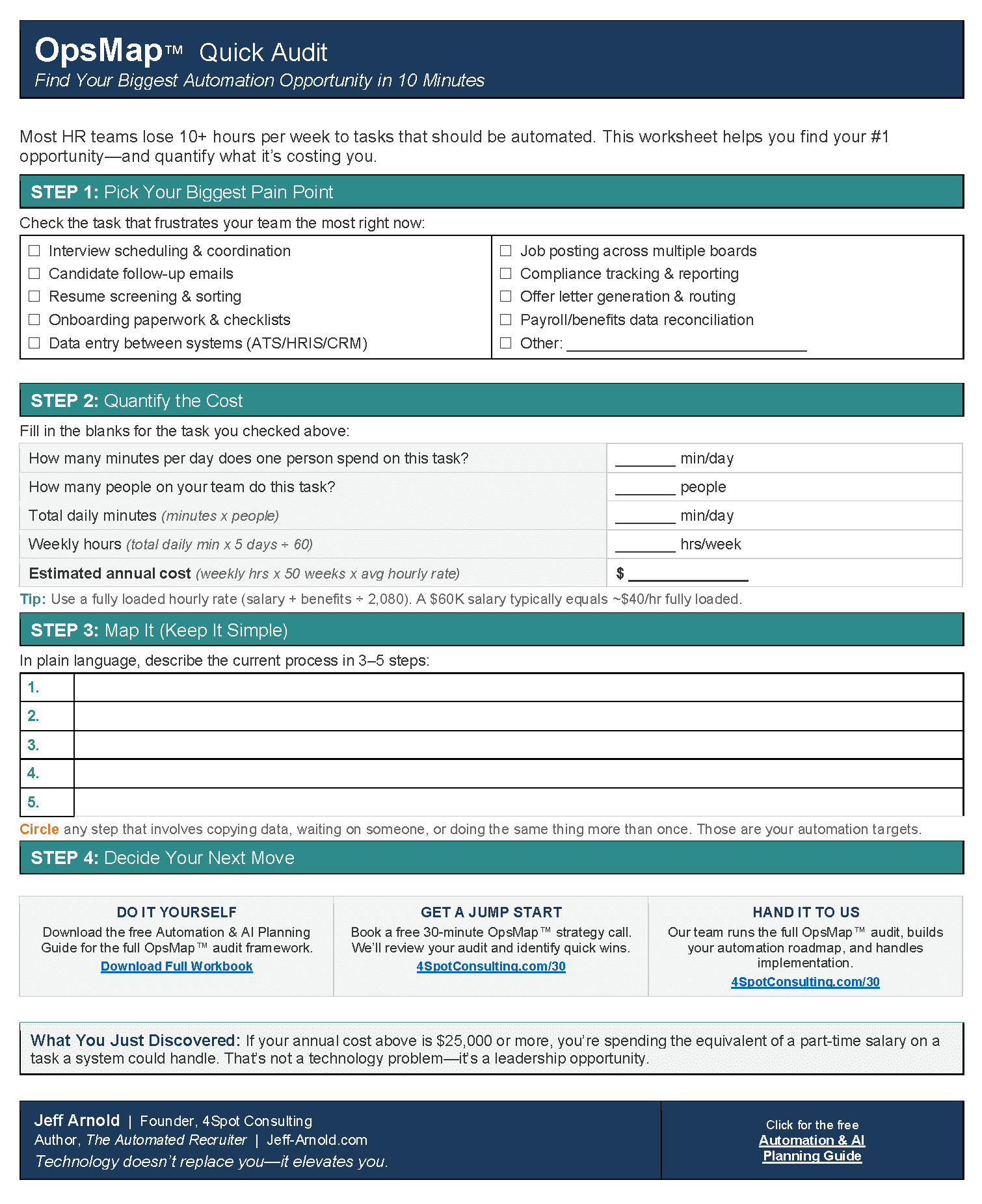
The engagement opens with an OpsMap™ diagnostic—a structured audit that maps where manual communication workflows are consuming executive time, creating data gaps in Keap, and generating revenue risk through delayed or inconsistent follow-up. OpsMap produces a prioritized automation roadmap with quantified time and revenue impact attached to each opportunity, so leadership can make investment decisions with full visibility into expected returns.
The OpsBuild™ phase implements the approved automation and AI architecture. This includes configuring Make.com scenarios that connect Keap, PandaDoc, communication platforms, and project management tools into a unified ecosystem. AI models are tuned to each executive’s communication style and organizational guidelines. Every workflow is documented and tested against edge cases before go-live.
OpsCare™ provides continuous system optimization after deployment. Communication workflows evolve as business priorities shift, new tools enter the stack, or volume patterns change. OpsCare ensures the automation investment compounds over time rather than degrading as the business scales.
Quantified Outcomes from Communication Automation
The impact of this architecture is measurable and consistent. Executives on the OpsMesh™ framework reclaim 25% or more of their working hours. That reclaimed time redirects into activities with direct revenue impact: strategic sales conversations, partnership development, and organizational alignment work that cannot be delegated or automated.
In one HR technology engagement, the executive team was spending significant weekly hours managing inbound candidate and client communications manually—parsing emails, logging notes into Keap by hand, and constructing follow-up reminders in a separate tool. After deploying an AI parsing layer through Make.com with direct Keap integration, the team eliminated over 150 hours per month of manual communication management. Candidate response times dropped from days to hours, improving both pipeline conversion and employer brand perception in a competitive talent market. The financial impact extended well beyond the efficiency gain: faster candidate placement cycles directly increased monthly revenue output. You can explore a comparable outcome in the detailed case study at $1.2 Million Saved: 4Spot Consulting’s AI Automation Transformation for Global Talent Solutions.
Expert Take
Automation skeptics often frame the concern as depersonalization—that routing executive communications through AI systems will make interactions feel transactional. The evidence from well-implemented systems shows the opposite. When AI handles triage and drafting, executives arrive at every human conversation fully informed, contextually prepared, and unhurried. The interactions become more personal, not less, because the executive is genuinely present instead of mentally managing their backlog.
Frequently Asked Questions
How does AI maintain an executive’s personal communication voice?
AI communication models train on each executive’s existing correspondence, communication guidelines, and approved response frameworks. The output is a draft that reflects established tone and style—the executive reviews and sends, adjusting as needed. Over time the model refines against accepted and modified drafts, continuously improving stylistic accuracy without requiring manual reconfiguration.
What happens when an AI-drafted response is wrong or inappropriate?
Every AI-generated draft enters a review queue before sending. No outbound message dispatches without explicit executive approval for high-stakes contacts. Workflow rules define which message types require review and which can send automatically—giving organizations precise control over where human judgment remains in the loop.
How long does it take to implement a communication automation system?
An OpsSprint™ engagement delivers a functional core system in a defined short-burst implementation cycle. The OpsMap™ diagnostic completed in advance means the build phase starts with a fully validated blueprint rather than discovery-in-motion, compressing implementation timelines significantly compared to traditional consulting engagements.
Do these systems work for executives managing both internal and external communications?
Internal and external communication workflows use the same automation infrastructure but apply different rules, routing logic, and CRM objects. External partner and prospect communications route through Keap contact records. Internal directives and task assignments route to project management integrations. Both streams benefit from AI summarization and action item extraction.
What is the first step toward building this kind of system?
The first step is an OpsMap™ engagement, which identifies the highest-cost communication bottlenecks in the current executive workflow, quantifies the time and revenue impact of each, and produces a prioritized automation roadmap. Most executives discover three to five high-impact automation opportunities in the first session alone. Book your OpsMap call to start the diagnostic.



RELATED POST